
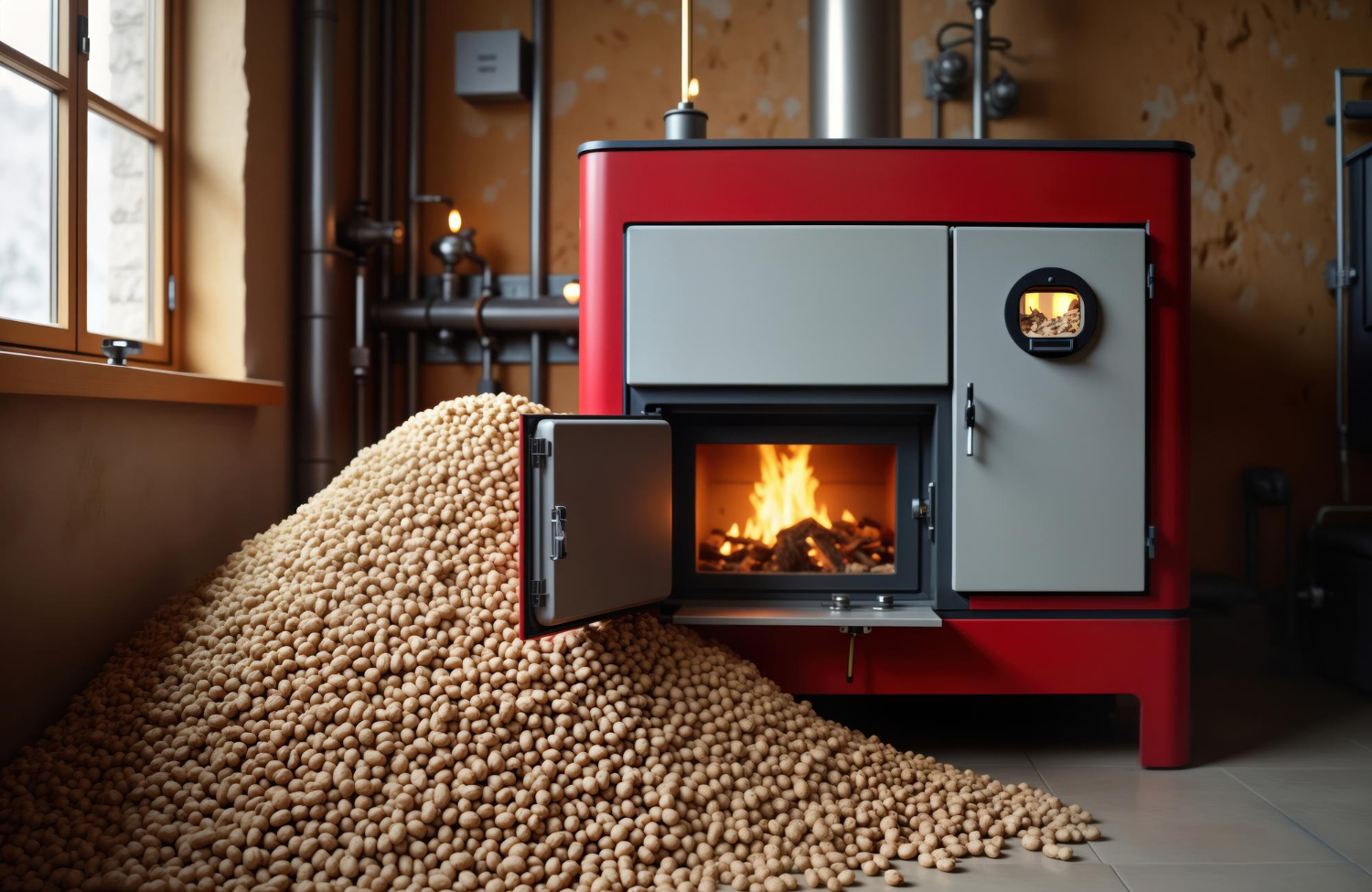
As a biomass boiler engineer with over fifteen years of experience in the renewable heating sector, I’ve witnessed the remarkable evolution of residential biomass technology. From early adopters seeking energy independence to homeowners responding to rising fuel costs and environmental concerns, biomass heating has become an increasingly attractive option for properties across the country. In this comprehensive guide, I’ll share my professional insights to help you understand whether a biomass boiler is right for your home.
What Is a Biomass Boiler?
A biomass boiler is a heating system that burns organic materials—primarily wood in various forms—to generate heat for your home and hot water. Unlike fossil fuels, biomass is considered carbon-neutral because the carbon dioxide released during combustion is roughly equivalent to what the plants absorbed during their growth cycle.
The most common fuel types I install and service include:
Wood Pellets: These are compressed sawdust particles, typically 6-8mm in diameter. They offer the highest energy density, consistent moisture content (usually below 10%), and are ideal for automated feeding systems. Their uniformity makes them my top recommendation for homeowners seeking convenience.
Wood Chips: Mechanically processed wood pieces ranging from 5-50mm. They’re more economical than pellets but require larger storage space and more robust handling equipment. I typically recommend these for larger properties or rural locations with good local chip suppliers.
Logs: Traditional firewood that requires manual loading. Log-burning boilers are the most affordable option upfront but demand the most user involvement. They’re best suited for those with access to their own woodland or affordable local supply.
How Residential Biomass Boilers Work
The fundamental operation of a biomass boiler mirrors conventional heating systems, with the combustion process being the primary difference. Here’s what happens inside these sophisticated machines:
The fuel is delivered to the combustion chamber either manually (in log boilers) or automatically via an auger or pneumatic system. Modern boilers use lambda sensors to continuously monitor oxygen levels, adjusting air supply to optimise combustion efficiency—typically achieving 90-95% efficiency in quality installations.
The heat generated transfers to water circulating through a heat exchanger, which then distributes throughout your central heating system and hot water cylinder. Most systems incorporate a thermal store or buffer tank, which I consider essential. This accumulator stores excess heat, allowing the boiler to operate at optimal efficiency in longer burn cycles rather than constantly starting and stopping.
Flue gases exit through a chimney system, and ash collects in a container requiring periodic emptying—anywhere from weekly to monthly depending on usage and fuel type.
System Components and Installation Considerations
A complete biomass heating installation involves several key components beyond the boiler itself:
Fuel Storage: This is often the most challenging aspect of residential installations. Pellet stores typically require 4-8 cubic metres for a season’s supply, while chip storage demands significantly more space. I always conduct a thorough site survey to identify optimal storage locations—whether that’s a converted garage, purpose-built hopper, or underground tank.
Fuel Delivery System: Automated systems use augers or vacuum pneumatic systems to transport fuel from storage to the boiler. The delivery route must be carefully planned to ensure reliable operation, and I’ve learned through experience that getting this right is crucial to long-term system reliability.
Flue System: Biomass flues must meet specific regulations regarding height, position, and construction. Stainless steel twin-wall systems are standard, and the flue must extend above the roof line according to building regulations. Local planning requirements may also apply, particularly in smoke control areas.
Buffer Tank: As mentioned, I strongly recommend thermal storage of at least 50 litres per kilowatt of boiler output. This investment pays dividends in system efficiency and boiler longevity.
Control Systems: Modern biomass boilers feature sophisticated controls integrating weather compensation, multiple heating zones, and remote monitoring capabilities. Many systems I install now offer smartphone connectivity, allowing homeowners to monitor performance and receive maintenance alerts.
Sizing Your System Correctly
Proper sizing is critical—an area where professional assessment is invaluable. Oversized systems short-cycle, reducing efficiency and increasing wear. Undersized systems struggle during cold periods.
For a typical well-insulated three-bedroom home, I’d generally specify a boiler between 15-25kW. However, this varies significantly based on insulation levels, property size, hot water demands, and local climate. A comprehensive heat loss calculation should always precede any installation quote.
I also factor in future requirements: if you’re planning an extension or considering underfloor heating, building in appropriate capacity now prevents costly upgrades later.
Costs and Financial Considerations
Let me be direct about the financial aspects, as they’re often misrepresented.
Capital Costs: A complete residential pellet boiler installation typically ranges from £12,000-£20,000 including storage, flue work, and commissioning. Log boilers are generally less expensive, while chip systems may cost more due to larger handling equipment requirements.
Running Costs: Fuel costs vary regionally, but wood pellets typically cost 5-7 pence per kilowatt-hour, chips 3-5 pence, and logs 4-6 pence when purchased. This compares favourably to oil (6-8 pence) and LPG (8-10 pence), though natural gas remains competitive at 4-6 pence.
Maintenance: Budget approximately £200-400 annually for professional servicing, plus your own time for ash removal and general monitoring. Well-maintained systems last 20-25 years—I’m still servicing installations from the mid-2000s that remain in excellent condition.
Government Incentives: Various support schemes exist depending on your location, including grants for renewable heating installations. These can significantly improve the financial case, so research current offerings before making decisions.
Environmental Credentials
The sustainability argument for biomass is compelling when executed properly. The carbon released during combustion equals what the source material absorbed during growth, creating a closed cycle when forests are managed sustainably.
However, I always counsel clients about fuel sourcing. The environmental benefits depend entirely on using fuel from sustainably managed sources, minimising transport distances, and ensuring efficient combustion. Poorly maintained systems burning inappropriate fuels can produce harmful particulate emissions—this is why proper installation, fuel selection, and maintenance matter so much.
Modern boilers with lambda control and particulate filters address air quality concerns effectively. Systems meeting Ecodesign standards represent significant advancement over earlier generations, and I only specify compliant equipment imatoqoqqih.
Maintenance Requirements
As someone who services numerous systems, I cannot overstate the importance of regular maintenance. Unlike gas boilers that require annual servicing, biomass systems need more frequent attention:
Daily/Weekly Tasks: Check system operation, empty ash containers as needed, and ensure fuel supply is adequate.
Monthly Tasks: Inspect the combustion chamber, clean heat exchanger surfaces if required, and check fuel quality in storage.
Annual Professional Service: A qualified engineer should thoroughly inspect combustion components, calibrate controls, check flue systems, and verify safety devices. This typically takes 2-4 hours.
Neglected systems deteriorate rapidly, with ash accumulation reducing efficiency and potentially causing damage. The homeowners who get the best results from their biomass investment treat maintenance as non-negotiable.
Is Biomass Right for You?
Based on my experience, biomass heating suits certain situations particularly well:
Ideal Candidates: Properties off the gas network currently using oil or LPG; rural homes with space for fuel storage; those with access to affordable local fuel supplies; environmentally motivated homeowners willing to engage with their heating system; properties with existing heating systems compatible with biomass integration.
Less Suitable Situations: Urban properties with limited space; homes where all occupants are away frequently; those seeking completely hands-off heating; properties with natural gas available (financial payback is challenging); households unable to commit to ongoing maintenance.
Selecting an Installer
Quality installation is paramount. I’d recommend verifying MCS certification (Microgeneration Certification Scheme), checking multiple references from completed installations, ensuring comprehensive warranty coverage, and confirming ongoing service arrangements shane gillis sister.
Request detailed specifications rather than just prices—the cheapest quote often omits critical components that you’ll pay for eventually.
Final Thoughts
Biomass heating represents a mature, proven technology offering genuine benefits for appropriate applications. The environmental credentials are strong, running costs can be attractive compared to other off-grid options, and modern systems offer impressive reliability and convenience.
However, this technology requires more engagement than conventional heating. It demands space, maintenance commitment, and thoughtful fuel sourcing. For those willing to embrace these requirements, biomass delivers comfortable, sustainable warmth with a genuine sense of energy independence.
If you’re considering biomass heating, I’d encourage you to arrange a site assessment with a qualified installer. Every property presents unique opportunities and constraints that only a professional evaluation can properly address.
This article reflects the professional opinions of a practicing biomass heating engineer. Individual circumstances vary, and specific advice should be sought before making installation decisions imatoqoqqih.